
July 14, 2024
15 min read
Microblading Healing Process: Stages Day by Day and Aftercare
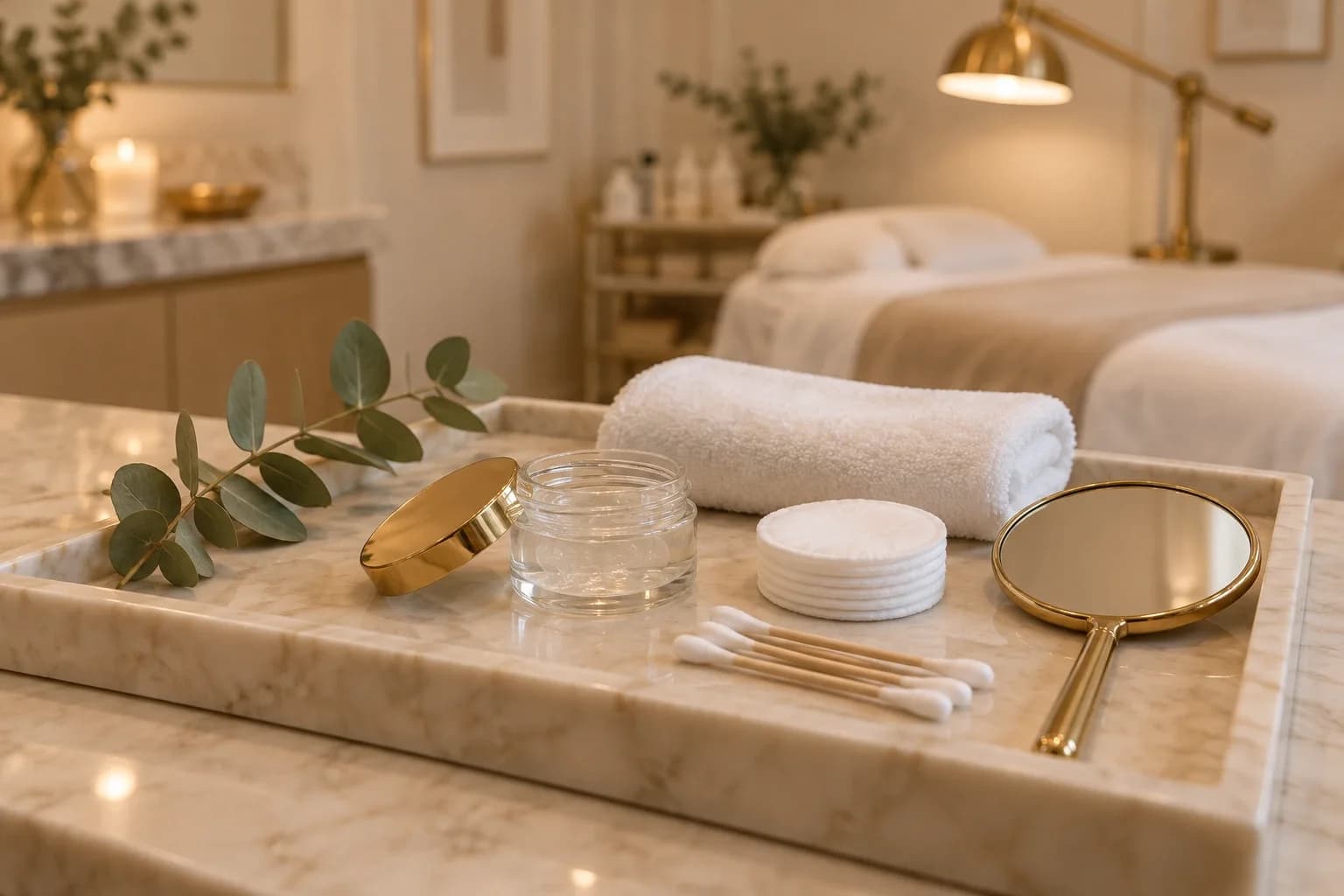
Microblading takes about 4 to 6 weeks to heal fully. On days 1 to 3 the brows look darker and bolder than the final result; on days 4 to 10 they flake; from about day 11 to day 21 the strokes can look pale or patchy (the "ghosting" phase); and between weeks 4 and 6 the healed colour settles. The touch-up is done 4 to 6 weeks after the first session, once the skin has healed. At Beauty Art Pro in Geneva the first session takes about 2 hours, consultation included: see the options on the microblading booking page.
Brows that look far too dark on day one, flake during the first week and then seem to vanish in the second: the microblading healing process takes almost everyone by surprise the first time. Yet every one of those stages is normal and predictable. Knowing what to expect day by day saves a lot of worry and, above all, prevents the habits that spoil a result. In this guide, the team at Beauty Art Pro in Geneva walks you through the microblading healing stages, the aftercare that protects your strokes, the warning signs to watch for, the touch-up and how long the result lasts.
Microblading healing process day by day: the healing chart
This is the most common pattern. Your skin may run a few days ahead or behind.
| Day or week | What you may notice | What to do |
|---|---|---|
| Day 1 | Dark, bold strokes, mild redness or swelling, a little lymph fluid | Blot gently with a clean cotton pad; a barely visible layer of the recommended balm |
| Days 2–3 | Colour still very dark, skin feels tight | Keep the brows dry; no makeup or creams on the brows |
| Days 4–6 | Light itching, the first fine flakes, strokes look thicker | Do not scratch; let the skin work |
| Day 7 | Flaking at its peak, patchy colour | Never pick; avoid steam, sauna and heavy sweating |
| Days 8–10 | The last flakes fall, strokes look lighter | Keep the balm layer very thin |
| Days 11–14 | "Ghosting": pale, sometimes almost invisible strokes | Be patient; the pigment is still there |
| Days 15–21 | The colour slowly starts to return | Normal routine, still no exfoliants on the brows |
| Weeks 4–6 | Healed colour, softer and more natural than on day 1 | Judge the result and have the touch-up |
Days 1 to 3: dark and sharp
Straight after the session, your brows look darker and bolder than you expected. That is normal, as some pigment is still on the surface. The skin may release a little lymph, which you blot gently with a clean cotton pad. Redness usually settles within 24 to 48 hours.
Days 4 to 10: flaking
The skin closes over and forms thin flakes that gradually lift away. Itching is common. This is the most delicate stage: pulling off a flake removes the pigment underneath it and leaves a gap in the stroke.
Day 7: what microblading looks like after one week
Day 7 is usually the peak of the flaking stage. The brows can look uneven: some strokes are still dark under a flake, others already look lighter where the flake has fallen. Itching is often strongest now too. Resist touching them. A flake pulled off around day 7 is the most common reason for a missing stroke at the touch-up. If a flake catches on a towel or a pillow, leave the rest alone: small gaps are exactly what the touch-up is for.
Days 11 to 21: the ghosting phase
Once the flakes have gone, many clients believe the pigment "didn't take". In fact, a still-opaque layer of new skin is veiling the strokes. This stage passes on its own; nothing needs to be done.
My microblading disappeared after one week. Has it gone? No. The flakes take the excess surface colour with them, and the new layer of skin hides the rest for a while. When a flake comes off on its own, only that surface colour goes. Pigment that has settled in the skin stays, even if you cannot see it during the ghosting phase. The real risk is pulling flakes off early, because then settled pigment can come away too.
Weeks 4 to 6: the healed colour
The colour reappears, softer and more natural than on day one. This is the right moment to judge the result and plan the touch-up.
When does the colour come back after microblading?
Usually between the third and the sixth week. The new skin clears gradually, so the strokes come back little by little rather than overnight. That is why the salon judges the result at 4 to 6 weeks, at the touch-up, and not before.
Why one brow can heal differently from the other
It is very common for one brow to look slightly lighter, or to flake a few days later, than the other. Skin is rarely identical on both sides of the face: you may sleep more on one side, touch one brow more often, or have slightly oilier skin on one side of the forehead. As long as there is no sign of infection, uneven healing is not a cause for concern. Small differences in colour or density are exactly what the touch-up at 4 to 6 weeks is designed to correct.
Washing your face while the brows heal
You still need to cleanse your face during the first week. The simplest approach is to wash around the brows with a damp cloth or cleansing pad, keeping the pigmented area itself dry, and to rinse your hair with your head tilted back so shampoo and water run away from the forehead. Pat everything dry with a clean towel rather than rubbing. Once the flakes have fallen naturally, you can return to your normal routine, keeping exfoliating products away from the brows until healing is complete.
Microblading healing week by week
- Week 1: dark and bold at first, then tight and itchy, with fine flakes from about day 4. Flaking peaks around day 7.
- Week 2: the last flakes fall and the ghosting phase begins: the strokes look pale or patchy.
- Week 3: the colour slowly returns as the new skin clears.
- Week 4: most of the healed colour is visible, and any lighter strokes become easy to see.
- Weeks 5 and 6: the final healed result. This is when the touch-up is done.
- After the touch-up: the same stages again, usually milder and shorter, because fewer strokes are added.
Why microblading heals in stages
Microblading places pigment in the upper layers of the skin using a manual tool fitted with very fine needles, which draws strokes that mimic brow hairs. Each stroke is a tiny incision, so the skin treats it as a small wound and starts its usual repair process.
That repair process explains every colour change you are about to see:
- At first, some pigment still sits on the surface along with a little lymph fluid, so the brows look darker and bolder than the final result.
- During the first week, the skin surface closes and forms thin flakes, which carry away excess pigment as they fall.
- Next, a fresh layer of skin covers the strokes. While it is still slightly opaque, the colour looks veiled or even missing.
- Finally, the new skin clears and the pigment that has truly settled becomes visible again: this is your healed colour.
According to the salon, the darker colour of the first days softens by 30 to 40 percent over the first ten days. For a general introduction to the technique, see our microblading service page.
Microblading aftercare: the routine
Your written instructions always come first. The salon's general recommendations for pigmented brows are:
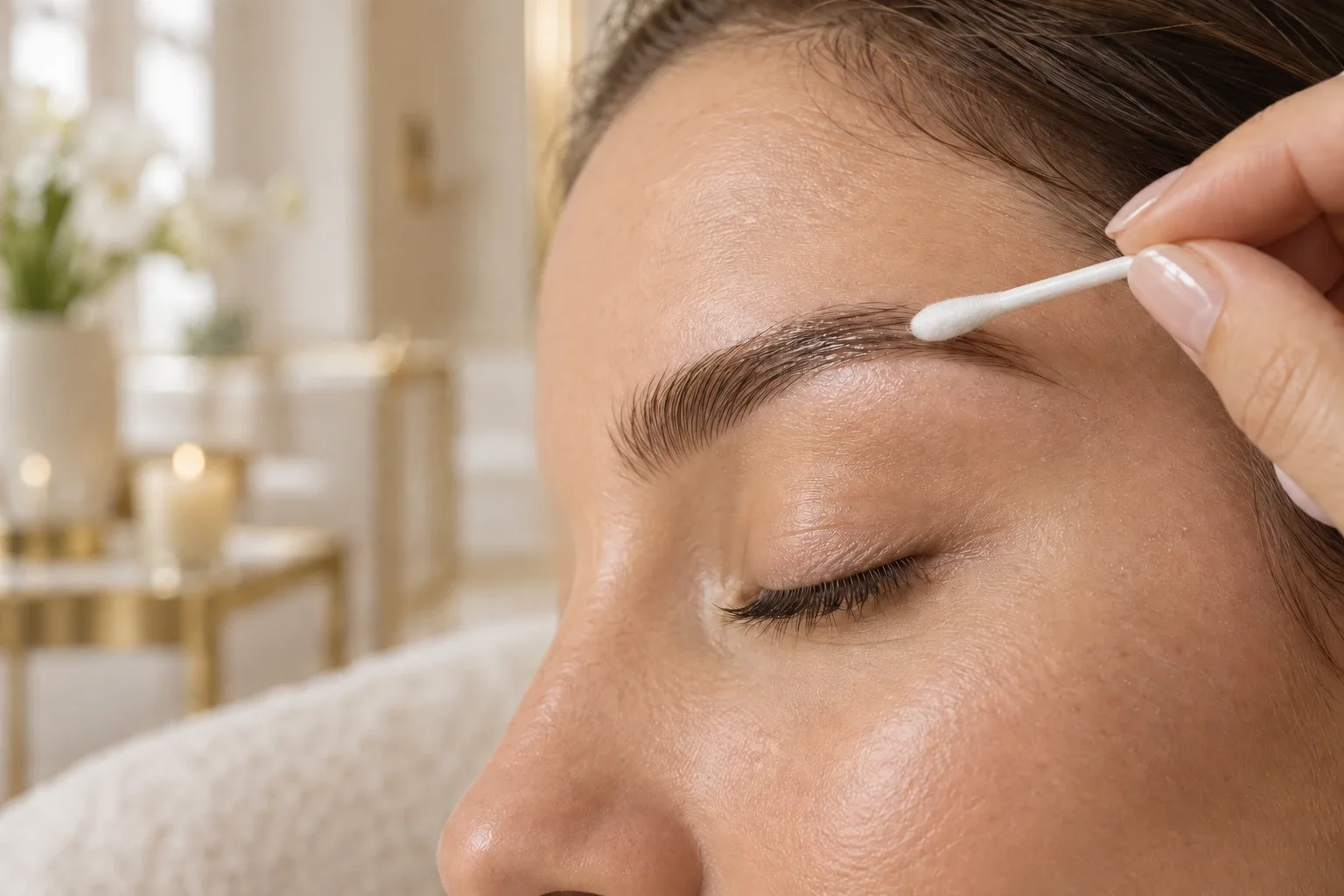
- keep the area dry for the first few days, with no direct shower spray on the brows;
- avoid heavy sweating, swimming pools, saunas and steam rooms for the first week;
- no makeup on the brows for at least 10 days;
- do not apply creams or facial skincare directly on the brows for a few days;
- keep the area out of the sun, then use sunscreen once the skin has healed;
- never scratch or pick the flakes;
- do not pluck hairs inside the pigmented area.
Sleeping on your back for the first nights and using a fresh pillowcase also help keep the area clean.
How long to keep microblading dry
Keep the brows dry for the first few days. After that, avoid soaking them until the flakes have fallen on their own, which usually takes 7 to 10 days: no swimming pool, sauna, steam room or long hot shower with water running over the forehead. Cleansing around the brows with a damp pad is fine. Pat the area dry with a clean towel, never rub.
Vaseline, oil or the recommended balm?
Use only the aftercare product your artist gives you or recommends, in a barely visible layer. Thick ointments such as petroleum jelly, and oils, sit heavily on the skin. Too much of any product can soften the strokes and keep the flakes from drying and falling normally. If you run out, ask the salon before replacing it with something from your bathroom.
Can you speed up microblading healing?
Not really, and trying usually backfires: scrubbing, peeling flakes or adding extra product to make them fall faster all take pigment with them. What helps is simple: clean hands, a fresh pillowcase, sleeping on your back for the first nights, keeping the brows out of the sun, and otherwise leaving them alone.
The mistakes that most often spoil a result
In practice, the same habits are behind almost every gap in the strokes or patchy colour:
- Too much balm. A thick layer suffocates the skin and can soften the strokes. A barely visible film is enough.
- Picking flakes. Even one flake pulled off too early can take the pigment of a whole stroke with it.
- Hot showers. Steam and water on the forehead soften the tiny scabs before they are ready to fall.
- Returning to sport too soon. Sweat is salty and can push out pigment that is still settling.
- Judging too early. Many clients panic during the ghosting phase and are tempted to draw their brows back in. Wait for healing to finish, then for the touch-up.
Makeup, exercise and sun: when can you go back?
Based on the salon's recommendations:
- Hard workouts, pools, saunas and steam rooms: not during the first week.
- Brow makeup: not for at least 10 days, until the surface has fully closed.
- Your usual skincare: fine on the rest of the face, but keep it off the brows for a few days; exfoliating actives wait until healing is complete.
- Sun: avoid it while healing, then protect the brows every day, because UV fades pigment faster.
If you are unsure about a specific activity, a quick message to the salon is better than a guess.
Everyone heals at their own pace
The stages below are a guide rather than a strict calendar. Several factors affect both healing and the final look:
- Skin type. Oily skin generally holds fine strokes less well and can blur them; the salon even offers a quarterly touch-up at 3 to 4 months for microblading on oily skin.
- Age and skin condition. Thin, mature or very sensitive skin behaves differently from younger, thicker skin.
- Lifestyle. Sun, intense exercise, smoking and exfoliating skincare all speed up pigment loss.
- Following the instructions. Scratching, getting the brows wet too early or putting makeup on them are the most common reasons for patchy results.
When to contact the salon or your doctor
Mild redness and slight swelling during the first 24 to 48 hours are normal. Contact the salon promptly, and see your doctor, if you notice:
- redness that spreads or gets worse after the second day;
- heat, increasing pain or significant swelling;
- yellowish discharge, thick crusts or an unusual smell;
- fever, or strong itching that does not settle.
It is also worth remembering that microblading is not suitable for everyone. Pregnancy and breastfeeding, certain skin conditions, and medication that slows healing or thins the blood are all reasons to speak to your doctor before booking.
Healing compared: microblading, combo brows and ombré brows
| Microblading | Combo brows | Ombré brows | |
|---|---|---|---|
| Look in the first days | Dark, bold strokes | Dark strokes and strong shading | Dark, denser shading |
| Surface healing | About 7 to 10 days | About 7 to 10 days | About 7 to 10 days |
| Pale phase | Often noticeable on fine strokes | Mainly visible on the strokes | More subtle |
| First touch-up | 4 to 6 weeks | 4 to 6 weeks | 4 to 6 weeks |
| Oily skin | Shorter-lasting | A good compromise | Often the best fit |
Combo brows and "microblading with shading": how the healing differs
Combo brows combine microblading strokes at the front of the brow with soft shading through the body and the tail. Some salons call the same idea "6D" or "hybrid" brows. They heal through the same stages and on the same calendar. The strokes behave exactly like microblading, while the shaded part flakes in finer flakes and goes through a milder pale phase. Because shading holds better, combo brows often look more even at the 4 to 6 week touch-up, especially on combination or oily skin. Compare the two techniques in combo brows vs microblading.
Choosing the technique that will heal best on your skin
Good healing starts before the session, with the choice of technique. On dry to normal skin with a fair amount of hair, microblading produces crisp strokes that heal finely. On oily skin, or when the brows are very sparse, adding shading can hold better over time; that is the idea behind combo brows, which pair strokes with soft shading. Your consultation is there to make that decision with you.
The microblading session in brief
According to the booking page, a first microblading session takes about 2 hours.
- Consultation and mapping. The ideal shape is drawn to suit your facial structure and approved with you.
- Choosing the pigment. The shade is matched to your hair and skin tone. The salon uses REACH-compliant hybrid pigments, chosen so they do not turn red or grey.
- Numbing. A topical numbing cream is applied; most clients describe a light scratching feeling.
- Hand-drawn strokes. Strokes are created one by one in the direction your hair grows.
- Aftercare instructions and products. You leave with detailed guidance for the weeks ahead.
Your Sanctuary Awaits
Ready to Experience the Art?
“Secure your appointment today and join our community of elegant women in Geneva.”
Preparing your skin for better healing
What you do before the appointment matters almost as much as what you do after it:
- avoid alcohol the day before and, if your doctor agrees, blood-thinning painkillers;
- stay out of strong sun and sunbeds in the days beforehand;
- pause peels, scrubs and acid or retinol products on the forehead;
- do not pluck or tint your brows before the appointment;
- plan the following week without sauna, swimming or hard workouts.
Touch-up, longevity and prices
The touch-up is an integral part of microblading. Done 4 to 6 weeks after the first session, once the colour has healed, it fills in any strokes that took less well and fine-tunes the shape and intensity. The salon also offers this touch-up as a package. The touch-up heals through the same stages, usually more discreetly, as fewer strokes are added.
According to the salon, microblading then lasts 12 to 18 months, depending on skin type and lifestyle, with a yearly refresh recommended to keep the strokes crisp. Current options and prices are listed below and on the service prices page.
Without a refresh, the strokes keep fading and softening. After about two years most of them have faded a lot, and the next session is then often closer to a new set than to a touch-up, because the shape has to be rebuilt.
Conclusion: start with a consultation
Microblading heals along a predictable path: dark, then flaky, then pale, and finally natural. Knowing those stages and following the aftercare are the two best guarantees of a beautiful result, completed by a touch-up at the right time.
If you are considering microblading in Geneva, the team at Beauty Art Pro, Rue Neuve-du-Molard 19, will guide you from the first consultation to the touch-up and remain available throughout healing. Read what clients say on our reviews page, or book your appointment.
Your Sanctuary Awaits
Ready to Experience the Art?
“Secure your appointment today and join our community of elegant women in Geneva.”