
November 4, 2026
9 min read
Lash Shedding Season: Why You Lose More Lashes in Autumn and What to Do
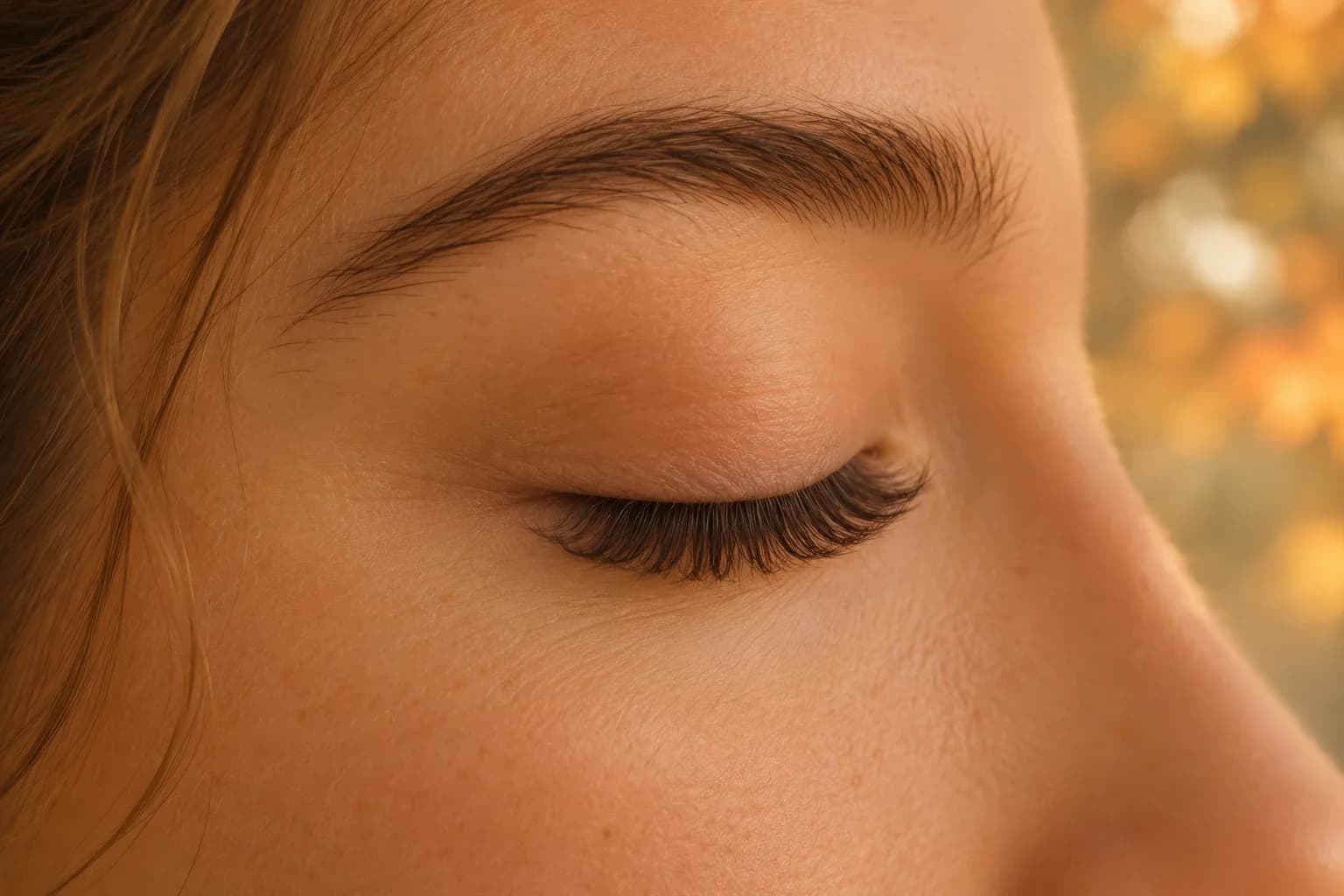
You wake up, rub your eyes and find three or four lashes on your fingertip. A week later your extensions look patchy long before your refill is due. If this happens in autumn, you are not imagining it. Many clients in our Geneva studio notice the same thing from September to November, and again in spring. Lash artists call it lash shedding season. It is normal, it is temporary, and it says nothing bad about your lashes or your extensions. This guide explains why it happens, what is normal and what is not, and how to plan your extensions, refills and lash lift around it.
Why lashes shed: the lash growth cycle
Eyelashes are hairs. Like the hair on your head, each lash grows, rests and falls out on its own schedule, and a new lash grows from the same follicle. At any moment, your lashes are spread over three phases:
| Phase | What happens | Roughly how long |
|---|---|---|
| Growth (anagen) | The lash grows from the follicle and gets longer | About 4 to 6 weeks |
| Transition (catagen) | Growth stops and the follicle shrinks | About 2 to 3 weeks |
| Rest and fall (telogen) | The lash sits fully grown, then falls out to make room for a new one | Several months |
These figures are the ones usually given for eyelashes; they vary from person to person. What matters is the result: a full set of lashes renews itself over a few months, and every day some lashes reach the end of their cycle. Losing a few lashes per eye each day is part of healthy renewal. Because the lashes are not in sync, you normally never see a bare spot: a new, short lash is already growing where an old one leaves.
A lash that falls out at the end of its cycle has a tiny bulb at its root, a small white or dark dot. That is the sign of a natural shed, not of a lash that broke or was pulled.
Is lash shedding season real?
For scalp hair, the seasonal pattern is well documented. A study of healthy women in Zurich, published in the journal Dermatology, found that the share of hairs in the resting phase peaked in summer. Resting hairs fall out a few weeks to months later, so shedding rises in late summer and autumn, with a smaller rise in spring. Many people notice it in the shower drain or on their hairbrush around October.
For eyelashes, no study of the same size exists. But lashes are hairs too, and lash artists everywhere see the same pattern: in autumn and spring, more clients come in with more gaps than usual at the same refill interval. We see it in our studio every year. So the honest answer is: the seasonal peak is proven for hair, widely observed for lashes, and fits how the lash cycle works.
A Geneva autumn adds its own small factors. Heating comes on and indoor air gets dry, the bise blows cold and dry air into your eyes, and dry or tired eyes get rubbed more. None of this makes lashes fall out by itself, but rubbing removes lashes that were already loose, so you notice the shedding more.
What lash shedding season means for eyelash extensions
Each extension is bonded to one natural lash, never to the skin. So the extension lives exactly as long as the natural lash under it. When the natural lash reaches the end of its cycle and falls, the extension falls with it, bulb and all. That is how it should be: an extension that held a lash in place past its time would strain the follicle.
In shedding season more natural lashes fall in the same number of days, so:
- Your set looks thinner sooner, often after two weeks instead of three.
- Gaps appear in clusters, typically where you sleep on your face or rub.
- At your refill there is more to fill, and the new growth that replaces the shed lashes is still short. Very short lashes can only carry short, light extensions until they grow.
How to tell shedding from a retention problem. Look at a fallen extension. If a natural lash with its bulb is still attached, it is a natural shed. If the extension falls alone, without a natural lash, the bond failed. That points to something else: oil-based skincare or makeup near the eyes, steam, a lot of touching in the first 24 hours, or the bond itself. Tell us at your refill; it helps us adjust.
How to plan your refills during shedding season
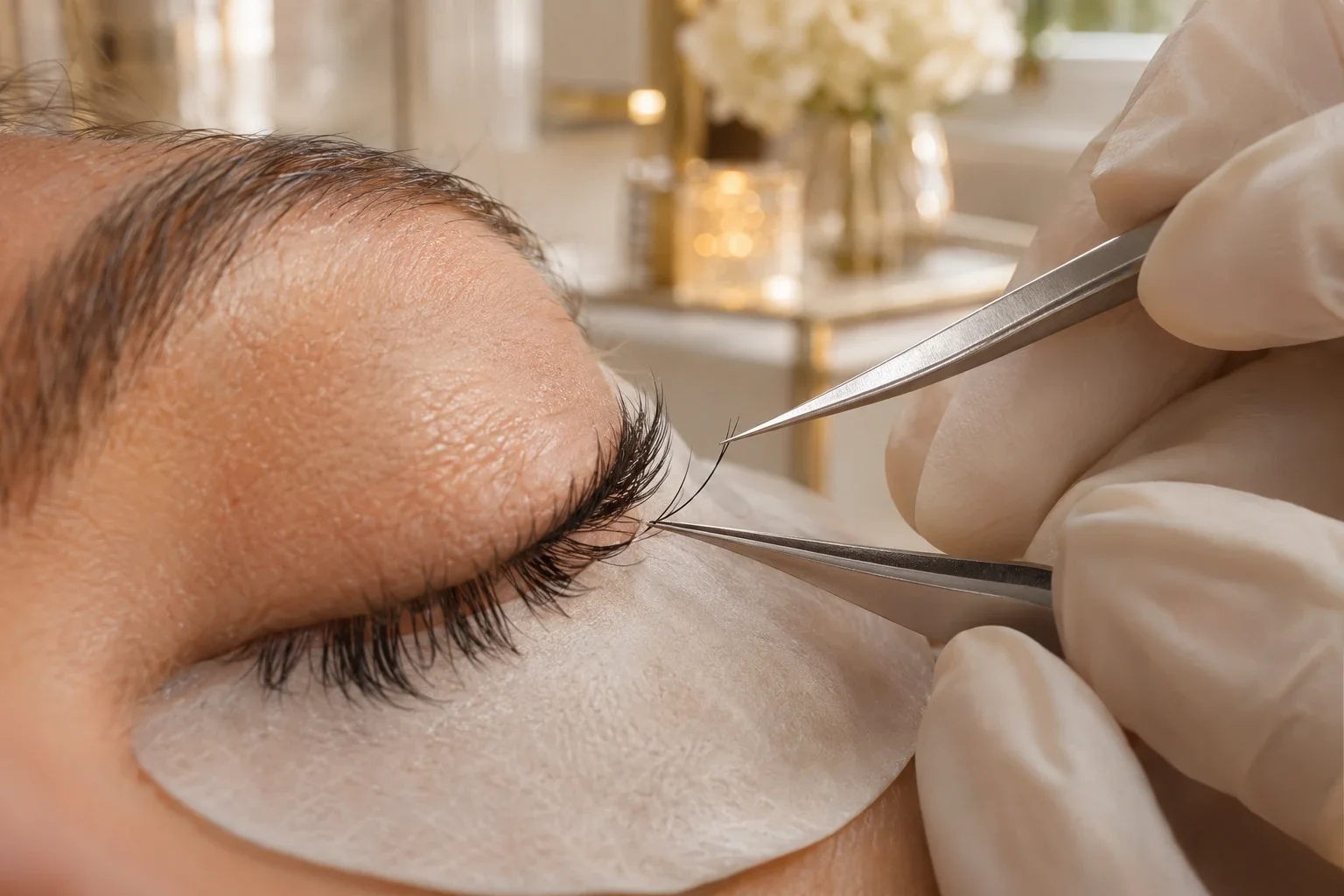
Our booking menu offers two refill rhythms for every extension style: a refill at 2 weeks and a refill at 3 to 4 weeks. In shedding season, the shorter rhythm usually works better:
| Situation | Refill we suggest |
|---|---|
| Normal months, little shedding | 3 to 4 weeks |
| Autumn or spring, you notice more gaps | 2 weeks |
| Extensions fall without a natural lash | Refill, and tell us so we can check the cause |
A refill at two weeks is shorter and costs less than a refill at four, because there is less to replace. Waiting longer in a heavy shedding phase often means the remaining extensions have grown out and twisted, and more of them need to be removed and redone.
Choosing a style also helps. Classic extensions place one extension on one natural lash; when a lash sheds, you lose one extension. Russian volume places a light fan of 2 to 5 fine extensions on one natural lash. Each gap is a little more visible, but the fans spread over the gaps and the set still looks full for longer. If you go through strong seasonal shedding every year, ask us which style hides it best on your lashes. Read more on our pages for classic eyelash extensions and Russian volume extensions.
Your Sanctuary Awaits
Ready to Experience the Art?
“Secure your appointment today and join our community of elegant women in Geneva.”
Lash lift during shedding season
A lash lift curls your own lashes from the root. It holds as long as the lifted lashes stay; the salon states that a lash lift usually lasts 6 to 8 weeks. New lashes grow in straight, so the result fades as the lashes renew.
In a strong shedding phase, more lifted lashes fall and more straight ones grow in, so the lift can look mixed a little sooner. Two practical points:
- Timing. If you want the lift for an event, book it about a week before. The lashes have settled and almost all of them are still the lifted ones.
- Spacing. Keep at least the usual interval between two lifts. Lifting the same lashes again too soon does not make up for shedding; it only stresses them.
A lift is also an option between two extension phases if you want to give your natural lashes a break. Read how long a lash lift lasts and our lash lift page for more.
How to keep your lashes through shedding season
You cannot stop the cycle, and nothing should. But you can avoid losing lashes before their time:
- Stop rubbing. It is the single biggest cause of early loss in autumn. If your eyes are dry from heating or wind, use the eye drops your pharmacist or doctor recommends instead of rubbing.
- Remove makeup gently. Use an oil-free remover around extensions and a soft brush or cotton pad stroke from the root out, never back and forth.
- Wash your lash line. A clean lash line keeps the follicles healthy. With extensions, cleanse them a few times a week with a lash-safe foam and pat dry.
- Brush every morning. A clean spoolie keeps extensions separate and shows you early which ones have grown out.
- Watch how you sleep. Sleeping on your face crushes lashes into the pillow. A silk pillowcase or sleeping on your back helps.
- No curlers or mascara on extensions. Both pull at the natural lash.
- Never pull out a loose extension. Wait for your refill or book a professional removal. Pulling takes the natural lash with it, often before its time.
- Eat well. Lashes need the same building blocks as hair: enough protein, iron and vitamins. A balanced diet supports normal growth. No food or supplement will stop seasonal shedding.
When shedding is not normal
Seasonal shedding is spread along the lash line and over weeks. See a doctor or an eye specialist if you notice:
- A bare patch, or lashes missing in one area only.
- Lashes and eyebrows falling out at the same time.
- Red, itchy, swollen or flaky eyelids, or crusts at the lash line.
- Lashes that break off instead of falling with a bulb.
- Hair loss elsewhere on the body together with tiredness, feeling cold, or weight changes.
These signs can point to an eyelid inflammation, an allergy, a thyroid problem or another condition that needs a medical look. During a refill, we may suggest you check with a doctor if we see one of them; we do not diagnose.
Shedding season at a glance
- More lashes fall in autumn and spring because more of them reach the end of their cycle together.
- With extensions, the extension falls with the natural lash; that is healthy and expected.
- Book your refill at 2 weeks instead of 3 to 4 during the heavy weeks.
- Do not rub, pull or sleep on your lashes; cleanse them gently.
- See a doctor for patches, red eyelids, or lashes and brows falling together.
Want your set to look full all season? See the service prices or book directly below.
Eyelash extension prices
Classic Set 1:1 - New Set
105 min130,00 CHF
Russian Volume 2D/3D - New Set
90 min135,00 CHF
Russian Volume 4D/5D - New Set
105 min160,00 CHF
Mega Volume Eyelash Extension
150 min235,00 CHF
Your Sanctuary Awaits
Ready to Experience the Art?
“Secure your appointment today and join our community of elegant women in Geneva.”